It’s easy to get caught up in the stress of rankings and prestige. Who doesn’t want a bumper sticker or license plate holder showing off an Ivy league or another top 20 school? Worse, many students feel they have to attend a famous, “elite” university to get a quality education.
In 1996, journalist Loren Pope wrote Colleges That Change Lives: 40 Schools That Will Change the Way You Think About Colleges. The book highlighted schools that weren’t household names but provided incredible, personalized, and life-changing education. The idea was to shift the focus from a school’s reputation to the quality of the student’s experience.
Today, the Colleges that Change Lives (CTCL) organization is the independent, non-profit successor to that idea. The organization works to champion liberal arts colleges and help students find the right college for them, acting as a much-needed remedy to the “prestige anxiety” that so often drives the college search.
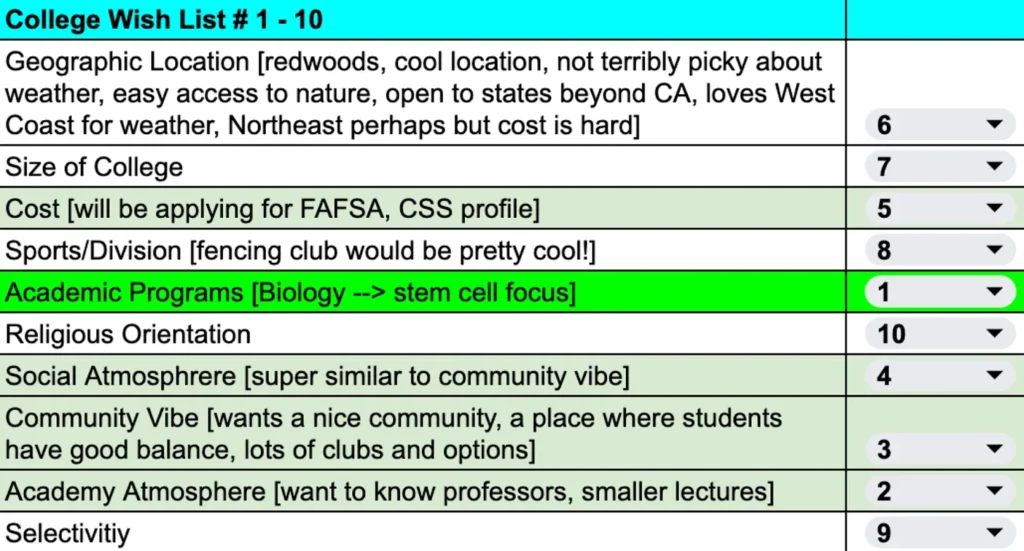
One of my favorite conversations with teenagers is what I call the “College Wish List” discussion. It’s often the pivotal moment when they truly begin to consider their own future, independent of parental or peer influence. For some it’s the first time I see their eyes light up and their spark ignite. It’s a moment in time where they get to dream. Some put selectivity near the top, while others don’t give it too much thought. Regardless of how important “prestige” is for a family, checking out the 40+ CTLC schools is a worthwhile endeavor.
What Makes a CTCL College Different?
The organization is made up of 45 small liberal arts colleges, all of which are independent institutions. When we say “small,” we mean it; these schools range from a few hundred students to a few thousand, with most having between 1,000 and 2,000 students. This smaller size allows for a dedicated focus on undergraduate teaching, and it often means more personalized attention from professors.
While the term “liberal arts” might bring to mind the humanities, these colleges offer robust programs in STEM and other fields. They’re called liberal arts colleges because they emphasize a broad education that encourages critical thinking, communication, and a well-rounded understanding of the world.
And don’t let the “tiny college in the middle of nowhere” stereotype fool you. While some CTCL colleges are in more rural settings, many are located in or near urban areas, offering students the benefits of a small campus with the opportunities of a bigger city. The following schools offer a glimpse into the exceptional value and opportunities that a CTCL degree provides.
- University of Puget Sounds: graduates enjoy 80% medical school acceptance rate and 90% law school acceptance rate.
- Willamette University: students go on to top-notch graduate schools, including Columbia University, Dartmouth College, Duke University, Harvard University, Princeton University, Stanford University, University of California-Berkeley, and Yale University.
- Oberlin College: graduates pursue a wide array of professional paths and can be found innovating in every field. Employers range from Google to NPR to Goldman Sachs.
- Kalamazoo College: named a Fulbright Top Producing Institution for the U.S. Student Scholar Program since 2020.
- Bard College: Bard graduates are employed across many fields and industries, including Aperture Foundation, Apple, Cary Institute of Ecosystem Studies, Citibank, Disney, French Embassy, Foreign Affairs Magazine, Goldman Sachs, Google, Memorial Sloan Kettering Cancer Center, Peace Corps, Pentagon, Saatchi & Saatchi, Sports Illustrated, Teach for America, The Metropolitan Museum of Art, Twitter, World Bank
- Denison University: 99% of Denison alumni are employed or in graduate school, with more than 96% of them working in their desired field or position within five years of graduation.
Finding Your Fit
CTCL’s main goal is to help you move past rankings and find a college that is the right fit for you. The organization provides resources for students, parents, and counselors to make wise college decisions. Most importantly, it offers detailed profiles of its member schools, giving you a great way to discover high-quality colleges you might not have considered otherwise. The organization even offers scholarships for students attending member schools.
Small liberal arts colleges aren’t for everyone. If you’re set on a large, comprehensive university, a CTCL school may not be the best fit. But if you’re interested in a more personal, undergraduate-focused education, especially if you’re undecided about your major, taking a look at the CTCL organization and its member schools is a great place to start.
Helping you soar sooner,
Carrie